 Akumal Snorkeling
How to Get to Akumal from Playa del Carmen (and Cancun and Tulum)
How to get to Akumal from Playa del Carmen comes down to three choices, a few pesos on a colectivo, the 100 MXN parking day on a rental car, or a tour coach that erases the road entirely. Akumal sits about 30 minutes south of Playa del Carmen on highway 307, so the trip is short no matter how you do it. The cheapest way is a colectivo van along the highway, the easiest is a rental car or taxi, and the simplest of all is a snorkeling tour that picks you up at your hotel and drops you at the bay. This guide walks through every option, what it costs, where to park, and what to expect when you reach the water. Once you are there the real question is how to swim with the turtles, and our compare all Akumal snorkeling tours page ranks every listing side by side. Akumal means place of the turtles in Mayan, and the bay earns the name. Green turtles graze the seagrass meadows all year, so there is no sighting season. The bay sits on the Mesoamerican Barrier Reef System, the second-longest reef in the world. Aim for a morning arrival, because the water is calmest and clearest before afternoon boat traffic stirs the sand.
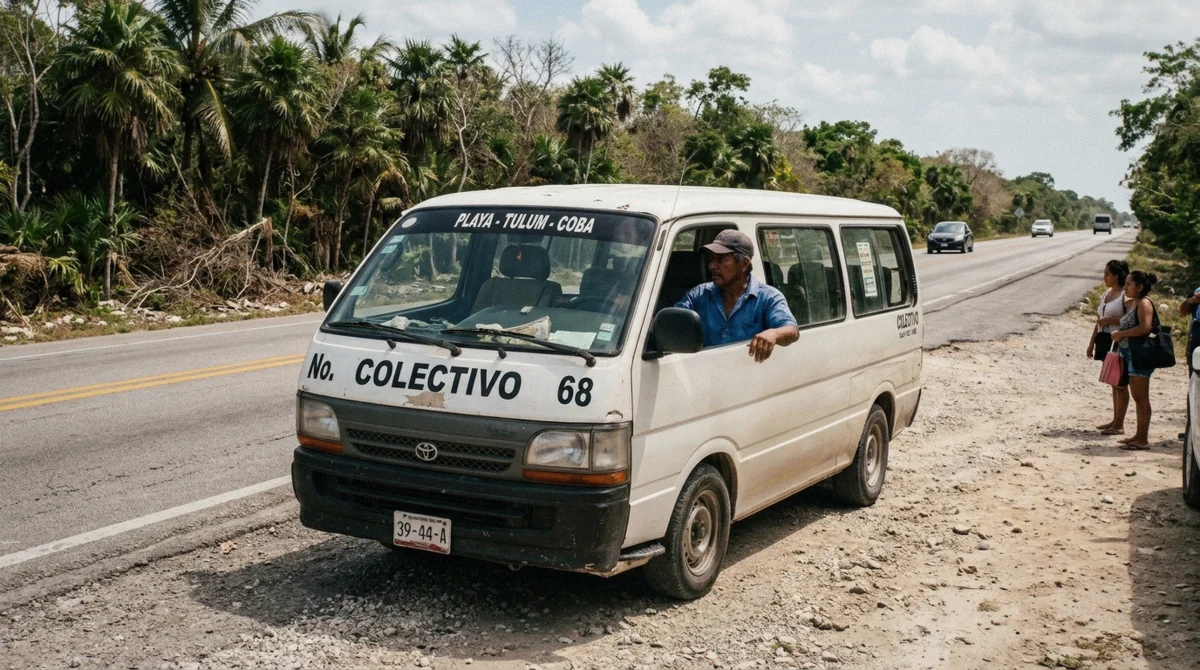
The colectivo is the local workhorse: flag one down on highway 307. Illustrative image.
Quick answer Colectivos drop at the turn-off, parking is 100 MXN a day, and the combos skip the road entirely
Akumal is about 30 minutes south of Playa del Carmen and 20 minutes north of Tulum, all of it along highway 307. A colectivo van is the cheapest way down, a rental car or taxi is the fastest, and an ADO bus or a tour with hotel pickup fills the middle ground. Parking at the bay costs 100 MXN per day and the beach itself is public.
Key takeaways
- Colectivos run the highway 307 corridor and drop you at the Akumal turnoff, where the bay is a short walk or cheap hop away.
- If you want the turtles handled for you, a guided option like the VIP turtle swim + GoPro starts at $44 and covers the guide and life jacket the protected zone requires.
- Morning has the calmest water and best visibility, and best time akumal snorkeling breaks down the seasonal details.
The Quick Answer: Getting to Akumal
Here is the short version before the detail. Akumal Bay sits on the Riviera Maya coast of Quintana Roo, about 30 minutes south of Playa del Carmen and 20 minutes north of Tulum. Every route follows highway 307, the single coastal road that threads the whole Riviera Maya together.
Pick your transport based on budget, group size and how much hassle you want on the day.
- Colectivo: the cheapest option, a shared van that runs highway 307 and drops you at the Akumal turnoff.
- Car: the fastest and most flexible, with paid parking at the bay.
- ADO bus or taxi: the middle options, comfortable and direct without driving yourself.
- Tour with pickup: the simplest, since transport, gear and guide are all handled in one booking.
Whichever way you arrive, remember the bay has been a marine protected area since March 2016. Buoys split the water into rehabilitation zones where swimming is off limits, a guided-only turtle circuit, and open zones anyone may swim. Free unguided snorkeling is allowed in the buoyed free zone near the sign at the beach.
See akumal snorkeling without guide for how that works in practice.
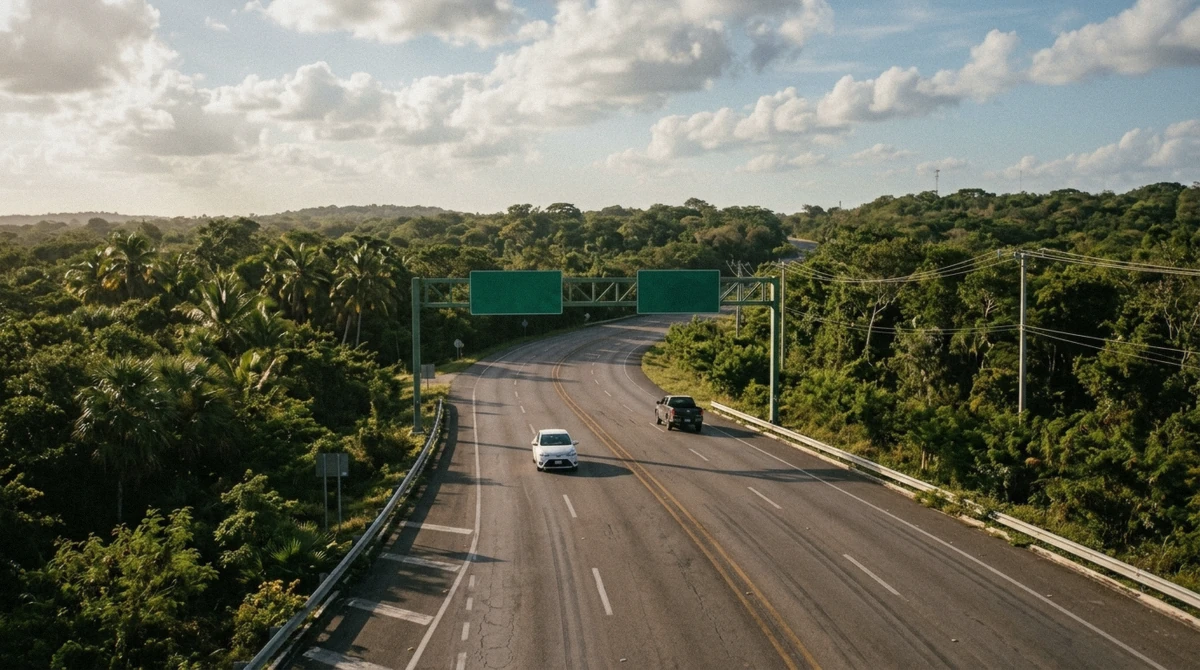
Highway 307 is the whole journey: one road, one turn-off for Akumal. Illustrative image.
Where Akumal Sits on Highway 307
Akumal lies directly on highway 307, the road that runs from Cancun down through Playa del Carmen and Tulum to the south. That position is why the trip is so simple. You never leave the main highway until you turn into town, and any van, bus or taxi already travelling the corridor passes the turnoff.
From Playa del Carmen the drive is about 30 minutes south. From Tulum it is about 20 minutes north. From Cancun you are looking at a longer run down the same road, which is why full-day combos that bundle Tulum, a cenote and Akumal make sense from that end.
The name Akumal means place of the turtles in Mayan, and the town grew around the bay where green turtles feed on the seagrass.
The bay itself sits on the Mesoamerican Barrier Reef System, the second-longest reef in the world. That reef shelter is a big part of why the water is swimmable and the turtles stay year round. At the north end of town you will also find Yal-Ku, a brackish, wave-free lagoon open daily from 9 am to 5 pm with a sculpture garden along the shore.
It is the calm-water fallback on windy days, and yal ku lagoon snorkeling covers it in detail.
The turn-off is easy to miss southbound, which is why the colectivo drivers are worth their few pesos: they know the arch, the OXXO and the beach-club gate by sight. Coming from Tulum the bay appears on the right about twenty minutes north of town, and from Playa del Carmen the drive runs about half an hour down the coast road. Akumal Pueblo, the village side of the highway, holds the cheaper parking and the more local food, while the beach side holds the bay, the dive shops and the tour desks.
Timing the road matters more than the mode. Highway 307 wakes early and fills by 10 am through the Riviera Maya's high season, and the return north in the late afternoon crawls through the same traffic. A 7:30 am start puts you in the water by 8:30 and back on the road before the coaches.
By Colectivo: The Cheap Local Way
The colectivo is how locals move along the Riviera Maya, and it is the cheapest way to reach Akumal. These are shared vans that cruise highway 307, picking up and dropping off anywhere along the route. You flag one down, tell the driver Akumal, and pay a small fare in cash.
From Playa del Carmen, colectivos leave from the area around Calle 2 and Avenida 20 in the town center. Vans run frequently through the day, so you rarely wait long. Tell the driver you want Akumal and they will drop you at the highway turnoff.
From there the bay is roughly a 20 to 25 minute walk, or you can take a short mototaxi ride into town and down to the beach.
The return is the same in reverse. Walk back up to the highway and flag a van heading toward Playa del Carmen or Tulum. A few things to know before you go:
- Carry small bills in pesos, since drivers make change from a cash box and large notes can be a problem.
- Vans stop when they are full rather than on a fixed timetable, so allow extra time in high season.
- Fare depends on your boarding point, so confirm the price with the driver before you sit down.
- Keep your swimsuit and towel with you, because you will walk from the highway drop-off to the bay.
The colectivo wins on price and frequency. It loses on comfort and on timing, since you are at the mercy of the vans. If you are travelling light and the weather is kind, it is hard to beat.
If you are carrying dive gear or travelling with small children, a car or a tour makes more sense.
Practical notes make the colectivo easy: flag one anywhere along the highway shoulder where you see it slowing, pay the driver in cash as you step down, and say 'Akumal' or 'bahia' when you board so they watch for your stop. Vans pass every few minutes through the day, thinning after dark, and the return stop sits opposite the one that dropped you. Budget a five-peso-friendly bill and a spare seat for your bag in high season.
By Car: The Drive, the Return and Parking at the Bay
A rental car gives you the most control over your day. From Playa del Carmen you head south on highway 307 for about 30 minutes and take the signed Akumal exit. The road into the bay area is short and straightforward, and the same route works in reverse for the return, which takes the same half hour back to Playa del Carmen.
Parking at the bay costs 100 MXN per day. The lot serves the beach area, so you can park once and walk to the sand, the dive shops and the restaurants. Arrive in the morning, because the lot fills as the day warms up and the tour groups arrive.
The beach-club day fee runs about 100 pesos and typically covers restrooms, showers and lockers, which is worth knowing when you budget the day.
Driving also opens up the rest of the coast. Tulum is 20 minutes south, Yal-Ku lagoon is minutes away at the north end of town, and the cenotes along the highway are an easy detour. Harmful sunscreens are banned in the protected bay, so switch to a reef-safe option before you leave the car.
One caution. Highway 307 is busy and the pace changes quickly between town zones and open stretches. Watch forcolectivos stopping without warning and for the topes, the speed bumps, near town entrances.
Drive the stretch once and the return trip feels easy.
Two details catch every first-time driver. Driving south from Playa del Carmen you cannot turn directly into the bay, take the retorno, double back north and turn right into the bay road at the arch. And the beach access road is controlled by an attendant, say you are going to the dive center or a restaurant and entry rules differ from the paid lots, where the 100 MXN day rate applies.
Both systems run on friendliness and small bills, and neither takes more than a minute.
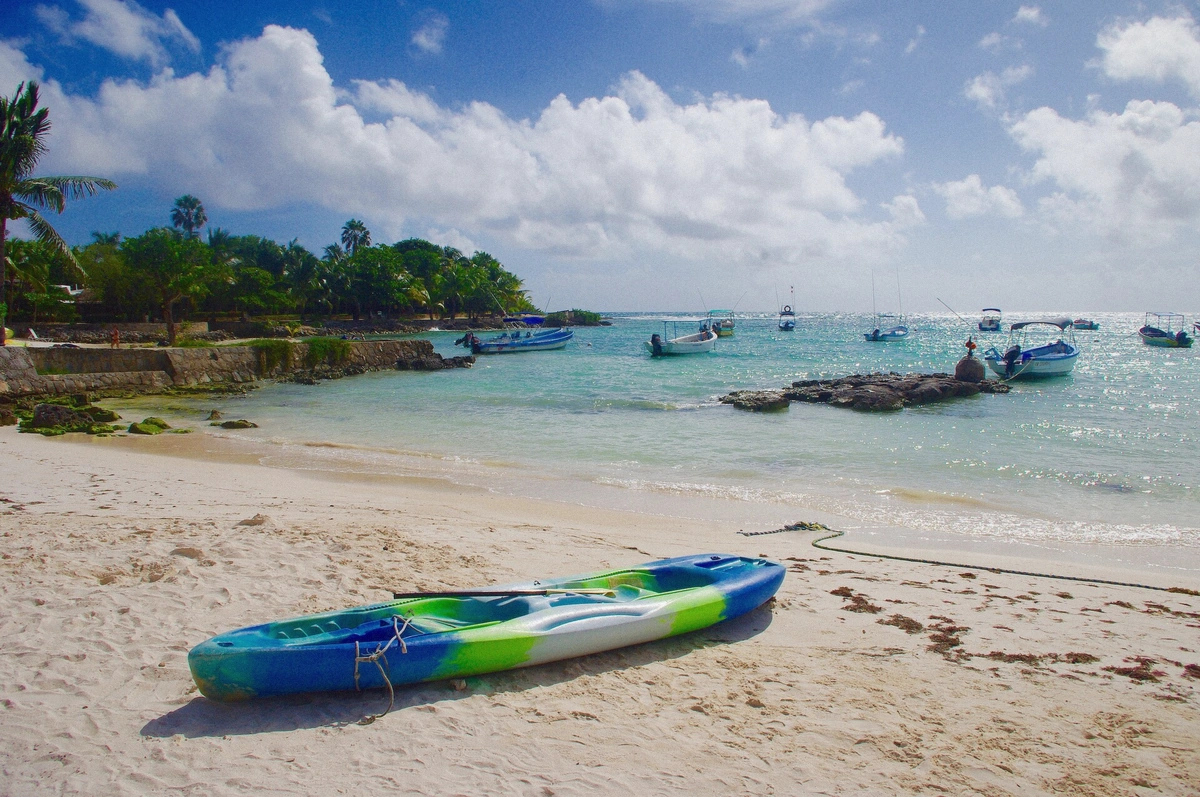
Sandy trail lined with coastal vegetation leading toward the beach at Akumal, Mexico Photo via Wikimedia Commons, CC BY 3.0.
By ADO Bus and Taxi: The Middle Options
Between the colectivo and the rental car sit two options that suit different travelers. The ADO bus network runs comfortable coaches along the corridor, and taxis offer a door-to-door ride without the paperwork of a rental.
ADO bus
ADO operates first-class and second-class service along highway 307, with buses stopping at the main towns. From Playa del Carmen you can catch an ADO or its second-class line southbound and ask for the Akumal stop on the highway. Prices for the short hop are not stated in a single fixed figure here, so check the ADO counter or app on the day.
The advantage over the colectivo is space and air conditioning. The disadvantage is frequency, since you plan around the schedule instead of flagging the next van.
Taxi
A taxi from Playa del Carmen to Akumal is the fastest door-to-door option after driving yourself. Agree the fare before you get in, because taxis on this route do not always run meters. A one-way ride costs more than a bus or colectivo by a wide margin, but it saves the highway drop-off walk and works well for groups splitting the fare.
The same taxi can wait or arrange a pickup time for the return.
Both options make sense if you value simplicity over cost. If you would rather let someone else handle the whole day, the breakdown below is for you.
The ADO long-distance buses serve Playa del Carmen's main terminal and stop at Tulum, but Akumal itself has no formal bus terminal, which is why the colectivo beats the big bus for this trip. From Cancun's airport or hotel zone, the honest hierarchy is simple: a rental car or private transfer for flexibility, the ADO to Playa del Carmen and then a colectivo for the budget route, or a tour that erases the whole question.
Taxis run the highway too, and a Playa del Carmen to Akumal cab ride costs more than the two of you will spend on colectivos all week. Agree the fare before the door closes, and remember the return leg: taxis cruise the bay road around checkout time, but a walk back to the highway usually finds a colectivo faster.
Luggage changes the math. A family with beach bags, a stroller or a cooler will find the colectivo's step-up entry and squeezed rows tiring before the swim, and that is the case where the coach combos earn their price: the bus picks up at the hotel, stows everything underneath, and hands you the bay without a single transfer. Solo travellers with one backpack lose nothing to the colectivo.
Tours with Pickup: Compare the Coach and the Bus
A tour with hotel pickup removes every transport decision. You book a seat, a van collects you, and you arrive at the bay with guide, gear and schedule already sorted. That matters in Akumal more than in most places, because the bay is a marine protected area where the guided-only turtle circuit requires a guide, a life jacket and a session cap.
Booking a tour wraps the transport and those rules into one purchase.
Guided sessions run 9 am to 5 pm and do not run on Mondays. One guide takes at most 6 swimmers and a session lasts at most 55 minutes. Every listing in our comparison offers free cancellation up to 24 hours before the start and reserve-now-pay-later checkout, so you can lock a seat without committing the money.
The comparison table below lines up every listing in this comparison in the catalog, from short bay sessions to full-day combos, with from-prices, durations and ratings drawn straight from the listings. Figures current for Q3 2026.
| Tour | From price | Duration | Rating |
|---|---|---|---|
| VIP turtle swim + GoPro | $44 (MXN) | 1 hour 30 minutes | 4.6 (385 reviews) |
| Tsuuk park turtle snorkel | $38 (MXN) | 1 hour 30 minutes | 4.8 (38 reviews) |
| Small-group VIP snorkel | $35 (MXN) | 1 hour 30 minutes | 4.9 (13 reviews) |
| Tulum + cenote combo | $118 (MXN) | 8 hours | 4.6 (304 reviews) |
| Cancun full-day combo | $118 (MXN) | 10 hours | 4.5 (370 reviews) |
| Tulum reef boat | $20 (MXN) | About 2 hours on the water, ticket valid 7 days | 4.3 (10 reviews) |
The catalog's own pick is the Tsuuk park turtle snorkel for its 4.8 rating. For a keepsake of the swim, the VIP turtle swim + GoPro puts the footage in your hands. If you prefer the smallest possible group, the Small-group VIP snorkel caps numbers hard and rates 4.9.
Budget travelers can look at the Tulum reef boat at $20, and the calm-water alternative is the Tsuuk park turtle snorkel inside the park.
The full-day combos bundle the drive with the highlights. The Tulum + cenote combo covers the ruins, a cenote and the bay in 8 hours from $118. From Cancun, the Cancun full-day combo stretches to 10 hours and also runs $118 as a from-price.
Note that the full-day EKINOX combos collect eco-fees of $40 per adult and $25 per child at boarding, on top of the from-price.
Which should you choose? If Akumal is the whole point of your day, a bay-focused session is cheaper and simpler. If you want ruins, cenote and turtles in one hit and you are staying in Cancun or the Riviera Maya, the combos earn their price.
Deeper detail on the bay itself is in the Akumal bay snorkeling comparison.
Getting-There FAQ
Short answers to the questions travelers ask most about the route and the arrival.
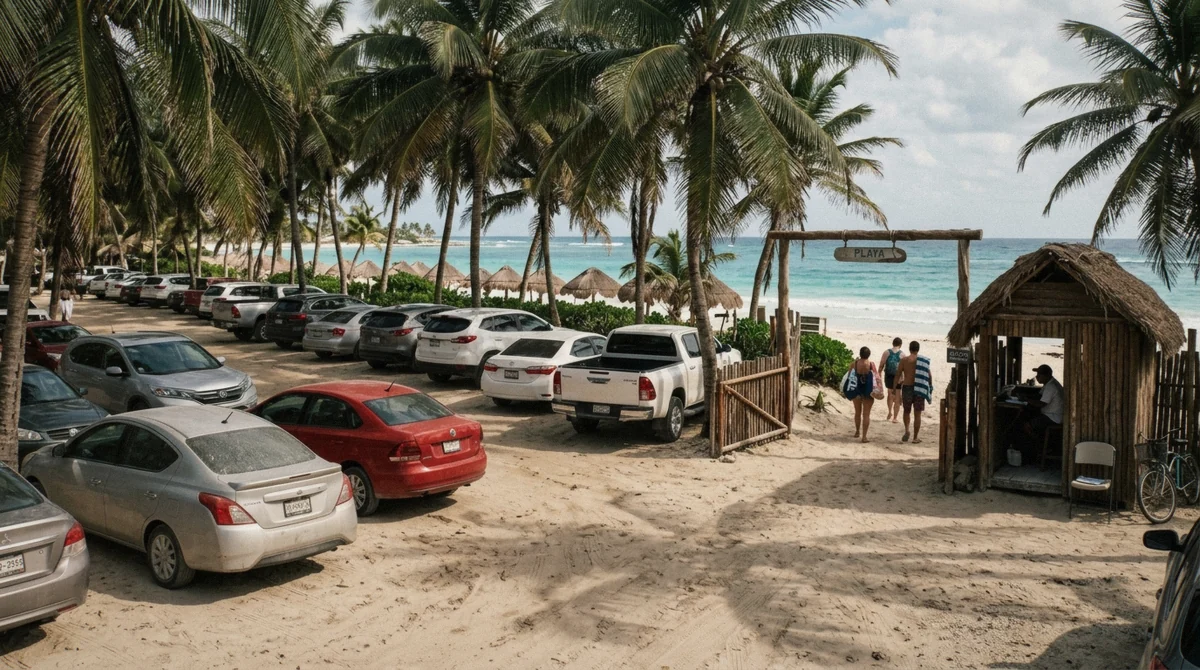
Parking at the bay: 100 MXN buys the day at the closest lot. Illustrative image.
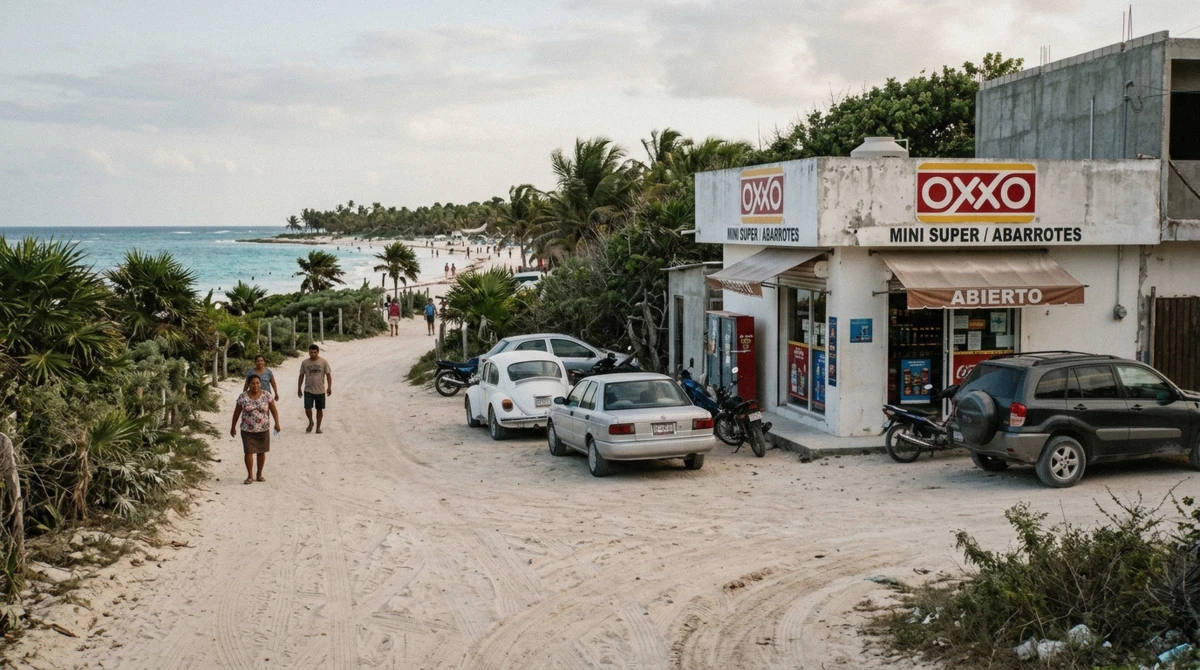
The bay road: the OXXO on the corner is the landmark every meeting point uses. Illustrative image.
Frequently Asked Questions
How do I get to Akumal?
Take highway 307 south from Playa del Carmen or north from Tulum. Your options are a colectivo van to the Akumal turnoff, a rental car with paid parking at the bay, an ADO bus, a taxi, or a tour with hotel pickup. The drive from Playa del Carmen takes about 30 minutes.
How far is Akumal from Playa del Carmen?
About 30 minutes south by road on highway 307. The distance is short enough that even the slowest option keeps the trip under an hour door to beach.
Do you have to pay to access Akumal Beach?
Akumal Beach is a public beach, so access to the sand itself is free. A beach-club day fee of about 100 pesos covers restrooms, showers and lockers if you want those services. Guided turtle sessions are paid separately, and free unguided snorkeling is allowed in the buoyed free zone.
Is there parking at Akumal beach?
Yes. Parking at the bay costs 100 MXN per day. Arrive early, because the lot fills up as tour groups arrive later in the morning.
Is Akumal worth visiting?
Yes, if you want to swim with wild turtles reliably. Three species feed in the bay year round and it sits on the second-longest reef in the world. If you would rather have transport and logistics handled, a listing like the Tsuuk park turtle snorkel wraps the whole visit into one booking.