 Akumal Snorkeling
Yal-Ku Lagoon Snorkeling: Akumal's Calm-Water Lagoon
Yal-Ku lagoon snorkeling is Akumal's calm-water option, a brackish lagoon at the north end of town where waves never reach. It opens daily from 9 am to 5 pm, a life jacket keeps you floating without effort, and the shore is lined with a sculpture garden you can walk between swims. The lagoon holds parrotfish, sergeant majors, rays and the odd barracuda, all in water so sheltered that beginners and children stay comfortable. On windy days, when the open bay turns choppy and the sand clouds up, Yal-Ku is where locals and repeat visitors head instead. This guide covers what the lagoon is, what the entry covers, what lives in the water, and when it beats the bay. If you are weighing every swim spot in town at once, start with [the complete Akumal snorkeling comparison] and come back here for the lagoon specifics. Weigh it against the bay sessions in the complete Akumal snorkeling comparison and the choice is usually about wind, not price.
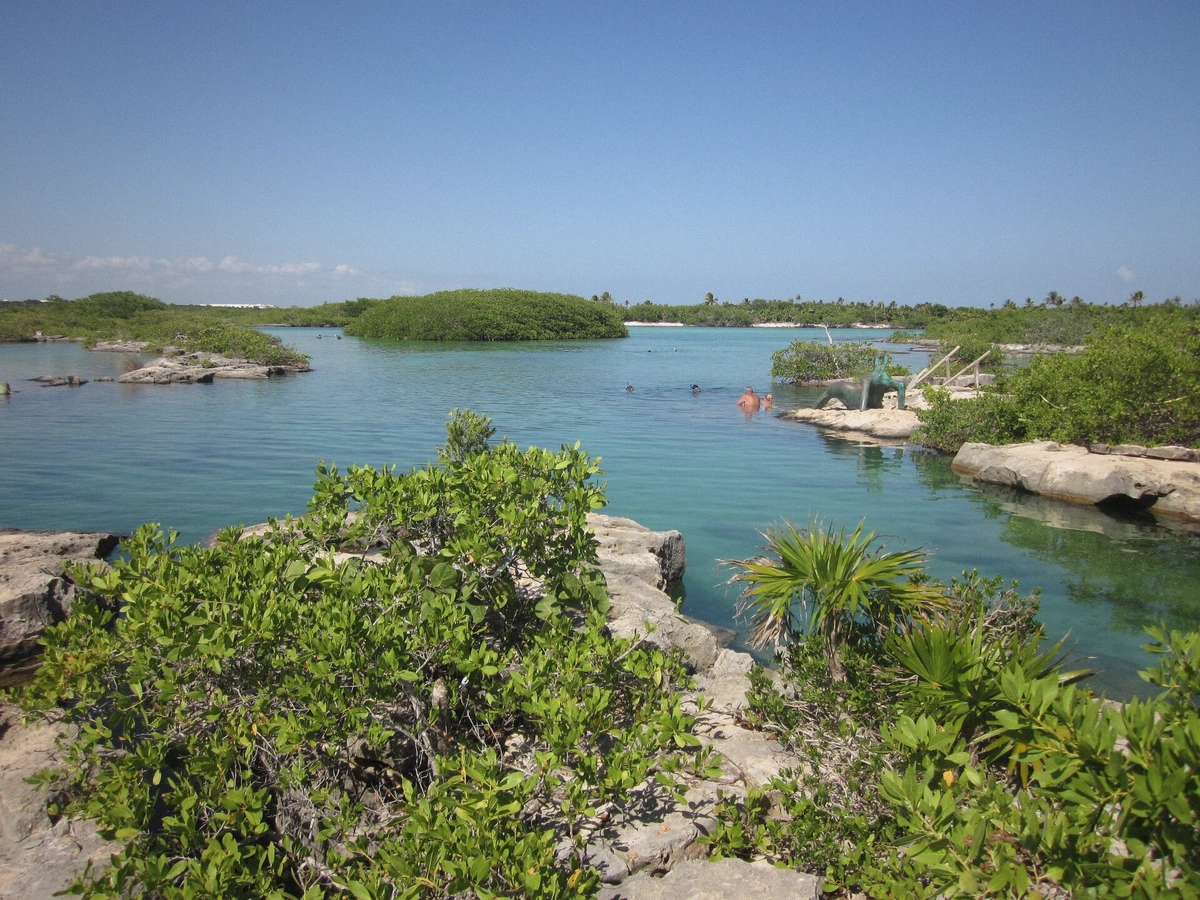
Yal-Ku's still water: no waves, no chop, fish at your fins. Photo via Wikimedia Commons, CC BY 2.0.
Quick answer Wave-free brackish water open 9 to 5, fish nursery and sculpture garden, tickets separate from the bay
Yal-Ku is a wave-free, brackish lagoon at Akumal's north end that works when the bay is rough. It opens daily from 9 am to 5 pm and charges an entry fee that covers the grounds, the sculpture garden and basic facilities, with discounted rates for Quintana Roo residents. The water is calm enough for beginners and children, and fish concentrate around the rocky edges where the lagoon meets the sea. Bring your own snorkel gear or rent it on site, since gear availability is not stated in the park's published details.
Key takeaways
- Yal-Ku is the calm-water fallback on windy days, open daily 9 am to 5 pm
- It suits beginners and families who want shallow, wave-free water
- For guided turtle swims in the bay instead, see [Akumal bay turtle swim tours compared]
What Yal-Ku Lagoon Is
Yal-Ku sits at the northern end of Akumal, a short drive from the main bay along the coast road. It is a lagoon, not a beach. Freshwater from the underground river system meets seawater here, so the water is brackish.
That mix gives the lagoon its slightly hazy look in places, and it also means the fish life differs from what you find on the reef side of town.
The name Yal-Ku comes from Mayan. Akumal itself means place of the turtles in Mayan, and the whole stretch of coast around it sits on the Mesoamerican Barrier Reef System, the second-longest reef in the world. The lagoon is cut off from the open Caribbean by a rock barrier, so waves from the east never break inside it.
Even when whitecaps run in the bay, the lagoon surface stays flat.
The shoreline is landscaped rather than sandy. Paths wind through native plantings and sculpture installations, with ladders and stepped entries leading down into the water at several points. There is no surf to fight, no boat traffic inside the lagoon, and no current worth naming on a normal day.
You float, you look down, and the water does the rest.
Why the water is calm
The rock shelf at the mouth of the lagoon absorbs the Caribbean swell before it enters. Depth inside runs from waist-deep near the edges to deeper water toward the mouth, and the bottom is a mix of rock, seagrass and sand. The brackish layer can create a slight shimmer in your view, especially in the upper, more freshwater-influenced end.
Snorkel toward the seaward side if you want the clearest water.
The lagoon sits at Akumal's quiet north end, a short walk or drive past Half Moon Bay, and it reads on the map like a flooded canyon: limestone walls, mangrove clumps and a mouth that opens to the Caribbean between rocks. Salt water seeps in under, fresh spring water floats above, and the brackish surface layer is why the light turns that famous milky jade. It is swimmable from end to end on a calm day, with the deep channel down the middle and shelves close enough to stand on for a rest.
The name Yal-Ku points to its nature, a place where waters meet, and the Maya used the sheltered mouth long before the first snorkel renter set up a shack. The park around it now carries the facilities, tickets, showers, a small restaurant and the shore path past the sculptures, so a visit runs half a day comfortably, best early before the tour vans from Playa del Carmen arrive.
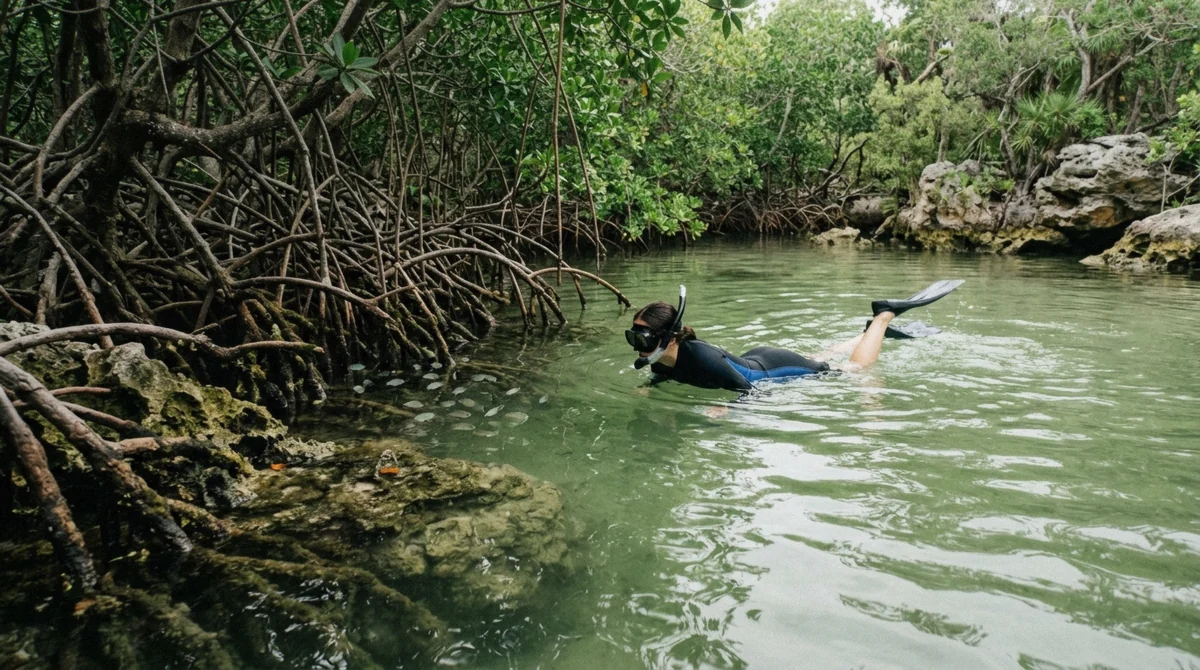
The mangrove edge holds the lagoon's smallest fish. Illustrative image.
Why Snorkelers Go: Calm Water When the Bay Has Wind
Akumal Bay depends on conditions. Morning has the calmest water and best visibility, while afternoon boat traffic stirs the sand and cuts what you can see. On windy days the bay gets worse still, with chop that makes surface swimming work and stirs up sediment across the seagrass.
Yal-Ku does not have that problem. The lagoon stays swimmable in weather that shuts the bay down.
That makes it the standard plan B, and for many visitors the better primary choice. If you are traveling with people who have never snorkeled, or with small children, the lagoon removes most of what makes open-water snorkeling tiring. There is no wave push, no drift, and you can stand up almost anywhere along the edges.
Our notes on [akumal snorkeling with kids] cover how the two spots compare for families in more detail.
The trade-off is marine life. The bay has turtles grazing seagrass year round, which the lagoon does not reliably offer. Yal-Ku rewards you with fish, rock formations and easy water instead.
A sensible day plan is bay in the morning for turtles, lagoon in the afternoon or on the windy day.
Timing your visit
The lagoon opens daily from 9 am to 5 pm. Early in the day you share the water with fewer people and the light angle is good. By midday the shore fills with tour groups, so if quiet matters to you, go at opening or in the last two hours.
There is no shaded water, so a rash guard helps more than sunscreen, and harmful sunscreens are banned in Akumal waters anyway.
Costs, Hours and Entry Tiers Compared
Yal-Ku charges a per-person entry fee at the gate. The exact current figure is not stated in our source material, so check the posted rate when you arrive. What we can confirm is that Quintana Roo residents get a discounted rate, so bring ID if that applies to you.
The park opens daily from 9 am to 5 pm, and last entry timing within those hours is not stated.
The fee covers access to the lagoon, the sculpture garden paths and the grounds. It is a garden and swim area, not a full beach club. Comparisons elsewhere in town are useful context.
At Akumal Bay, the beach-club day fee runs about 100 pesos and includes restrooms, showers and lockers, and parking at the bay costs 100 MXN per day. What Yal-Ku includes for its own fee, in terms of lockers, showers or gear rental, is not stated.
What to bring
Bring your own mask and snorkel if you have them, plus a rash guard, reef-safe habits and cash for the gate. Water shoes help on the rocky entries. Life jackets are standard practice for weaker swimmers, and in the guided zones of the bay they are mandatory, so it is worth owning one that fits.
If you would rather have it all arranged
Guided options take the planning off your plate. The listings below are bay and combo tours rather than lagoon tickets, but they show what a guided half day costs in Akumal right now. Every listing in the comparison offers free cancellation up to 24 hours before the start and reserve-now-pay-later checkout.
Figures current for Q3 2026.
| Tour | From-price | Duration | Rating |
|---|---|---|---|
| VIP turtle swim + GoPro | $44 | 1 hour 30 minutes | 4.6 |
| Tsuuk park turtle snorkel | $38 | 1 hour 30 minutes | 4.8 |
| Small-group VIP snorkel | $35 | 1 hour 30 minutes | 4.9 |
| Tulum + cenote combo | $118 | 8 hours | 4.6 |
| Cancun full-day combo | $118 | 10 hours | 4.5 |
| Tulum reef boat | $20 | About 2 hours on the water, ticket valid 7 days | 4.3 |
Note that full-day combos collect eco-fees at boarding, $40 per adult and $25 per child, on top of the from-price. Budget for that if you book a combo. The catalog's own pick among the six is the Tsuuk park turtle snorkel for its 4.8 rating.
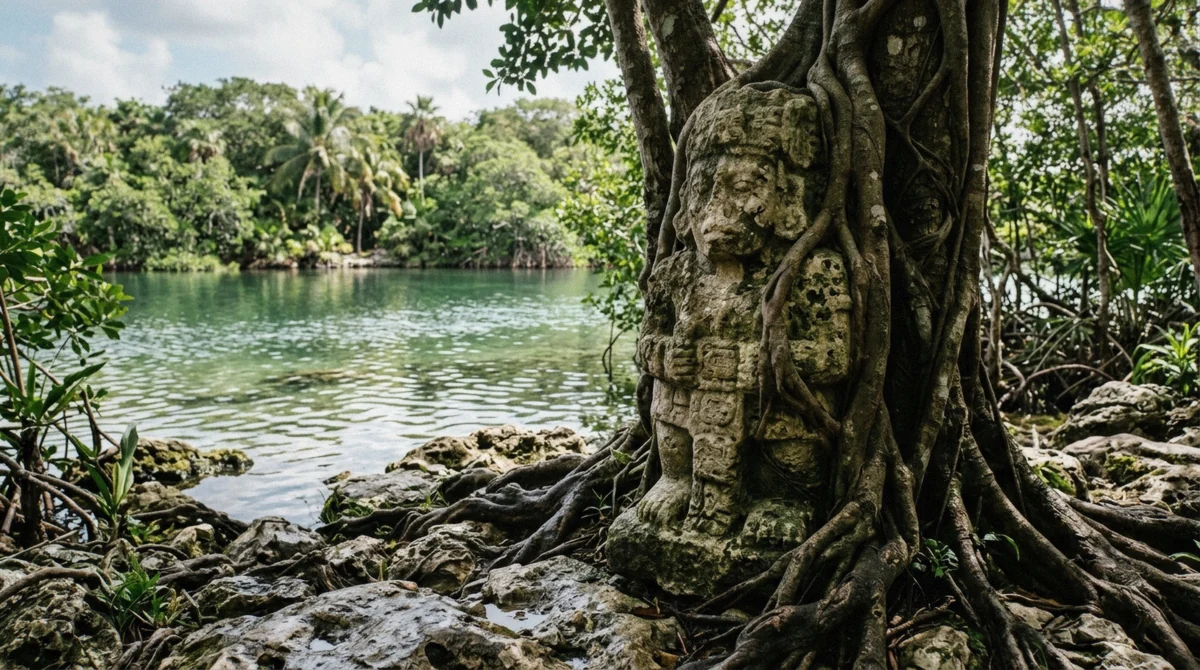
The sculpture garden runs along the shore you swim past. Illustrative image.
What You Will See in the Lagoon
Yal-Ku is a fish spot. The rock walls and seagrass hold schools of sergeant majors, and parrotfish work the algae on the rocks. You can also run into rays resting on the sandy patches, and barracuda hang in the deeper water near the mouth more often than visitors expect.
Small juvenile fish use the rocks as shelter, so the edges are busier than the open middle.
What you will not reliably find here is the lagoon's famous neighbor. Turtles feed in Akumal Bay, where green turtles graze the seagrass meadows year round, joined by loggerhead and hawksbill. There is no turtle sighting season, they are there all year, and May to October is nesting season when females come ashore at night.
The lagoon sits apart from that seagrass grazing ground, so go to the bay for turtles.
Visibility and the brackish mix
The freshwater meeting the salt creates a thermocline and a slight haze in the upper end of the lagoon. Move toward the seaward mouth and the water clears. Fish concentrate there too, where the rock barrier lets in nutrients from the Caribbean.
Take it slowly, hover still for a minute, and the shy species come back out of the rocks.
A sample lagoon circuit
Enter at the main ladder, swim the near edge toward the mouth, loop around the deeper water at the seaward end, then drift back along the far shore. That circuit covers the fishiest ground and keeps you out of the shallowest, haziest water. Most visitors are satisfied in 45 minutes to an hour, which matches the standard guided session length in the bay of at most 55 minutes.
Yal-Ku's fish live their whole lives here, so the lagoon reads like a nursery rather than a snapshot of the reef. Juvenile snappers and grunts school in the deeper channel, sergeant majors dash at anyone drifting too close to their rocky nurseries, and the mangrove roots hold small life that the open bay never shows. Rays rest on the sandy patches on quiet days.
The water itself is the attraction on a windy day: the reef shields the lagoon's mouth, so while the bay chops, the lagoon stays glassy. Visibility runs milky-green rather than ocean blue, a mix of freshwater and salt that takes getting used to, and it clears as you swim toward the sea side of the lagoon.
The rules mirror the bay's: biodegradable sunscreen only, no touching or chasing, and no climbing on the sculpture garden, which the lagoon's operators maintain as both art and reef. Entry stairs and rocky shelves make water shoes useful, and the tiered tickets, general admission plus the Plus and Experience options, add guided touches and gear at the upper levels. The official site publishes the tiers, and residents of Quintana Roo get discounted rates with ID.
The Sculpture Garden and the Lagoon's Story
Half of a Yal-Ku visit happens on land. The shore is an open-air sculpture garden, with installations placed along the paths between swim entries. You walk from piece to piece through native plantings, and iguanas sun themselves on the rocks as you go.
It gives the place the feel of a park rather than a beach, and it is a genuine rest day activity even for people in your group who never get in the water.
The lagoon itself sits where the freshwater aquifer meets the sea, part of the same underground river system that feeds the cenotes across the Riviera Maya. That brackish mixing zone is biologically productive, which is why the fish life holds up without a coral reef inside the lagoon. The name Yal-Ku comes from Mayan, like Akumal itself, a reminder that this coast was named long before the tour buses arrived.
Practically, the garden layout solves the usual lagoon problem of where to enter. Instead of one beach, you get multiple stepped entries spaced along the shore, so swimmers spread out rather than clustering. Between swims you dry off on a bench in the shade and look at sculpture.
For a day that mixes light culture with easy water, nothing else in Akumal does it.
Yal-Ku vs Akumal Bay: Which Water for Which Day
Both spots are worth your time, and they answer different needs. The bay is the turtle spot, protected since 2016 as a marine protected area with buoys splitting the water into rehabilitation zones, a guided-only turtle circuit and open free-swim zones. Free unguided snorkeling is allowed in the buoyed free zone near the rules sign, and our guide to [akumal snorkeling without guide] explains exactly how that works.
The lagoon is the calm spot, wave-free by geography and open to anyone who buys an entry.
Choose the lagoon when
The wind is up, the group includes first-time snorkelers or young kids, or you want a slower day with art and shade between swims. The lagoon also wins if the bay's guided sessions are booked out, since commercial bay sessions run 9 am to 5 pm but do not run on Mondays, with one guide per at most 6 swimmers and a mandatory life jacket.
Choose the bay when
You have come to swim with turtles. That means a guided session on the turtle circuit or one of the bookable tours. The [VIP turtle swim + GoPro] pairs the swim with photos, the [Small-group VIP snorkel] keeps the group tight at 4.9 rated quality, and the [Tsuuk park turtle snorkel] is the catalog pick for its 4.8 rating.
Learn the seasonal angles in our piece on [best time akumal snorkeling].
A day that uses both
Guided bay sessions run through the day, but morning water is calmest and clearest. Book a bay session first thing, then drive the few minutes to Yal-Ku for an afternoon float when the bay boats start stirring sand. On a windy day, flip it, start at the lagoon and slot into a bay session if conditions settle.
If your base is Cancun and you want the whole coast in one day, the [Cancun full-day combo] stacks Tulum, a cenote and Akumal into 10 hours.
The honest summary from both sides of the comparison: the bay holds the turtles, the lagoon holds the calm, and a week here usually includes both. Choose the bay for the sighting you came for, choose the lagoon for the wind day, the small children and the unhurried fish watching, and let the season's first north wind make the decision for you if the forecast gets loud.
The pricing symmetry settles most arguments: a guided bay session starts around the VIP turtle swim with GoPro photos at $44 or the Tsuuk park turtle snorkel at $38, while the lagoon sells its own day ticket at the gate. On a flat morning the bay wins for anyone chasing turtles, on a chopped-up afternoon the lagoon wins by default, and travellers with a free week simply do both. Time the pair with our best time guide and pack for it with the Akumal kit list.
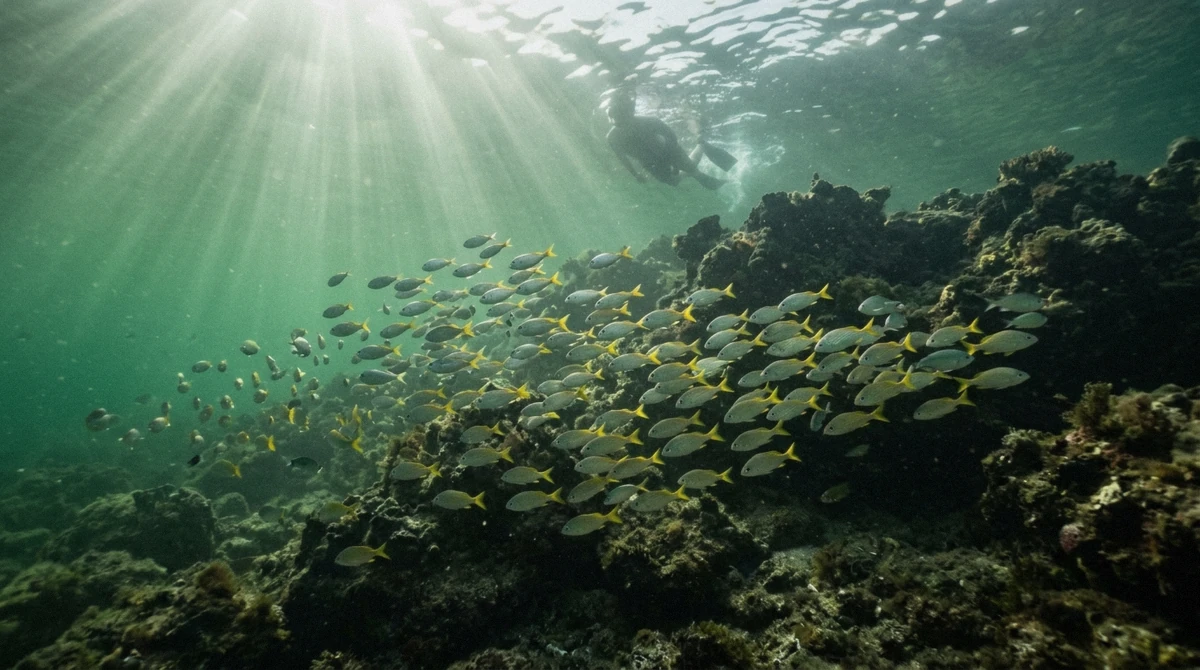
A fish nursery in all but name: juveniles everywhere. Illustrative image.
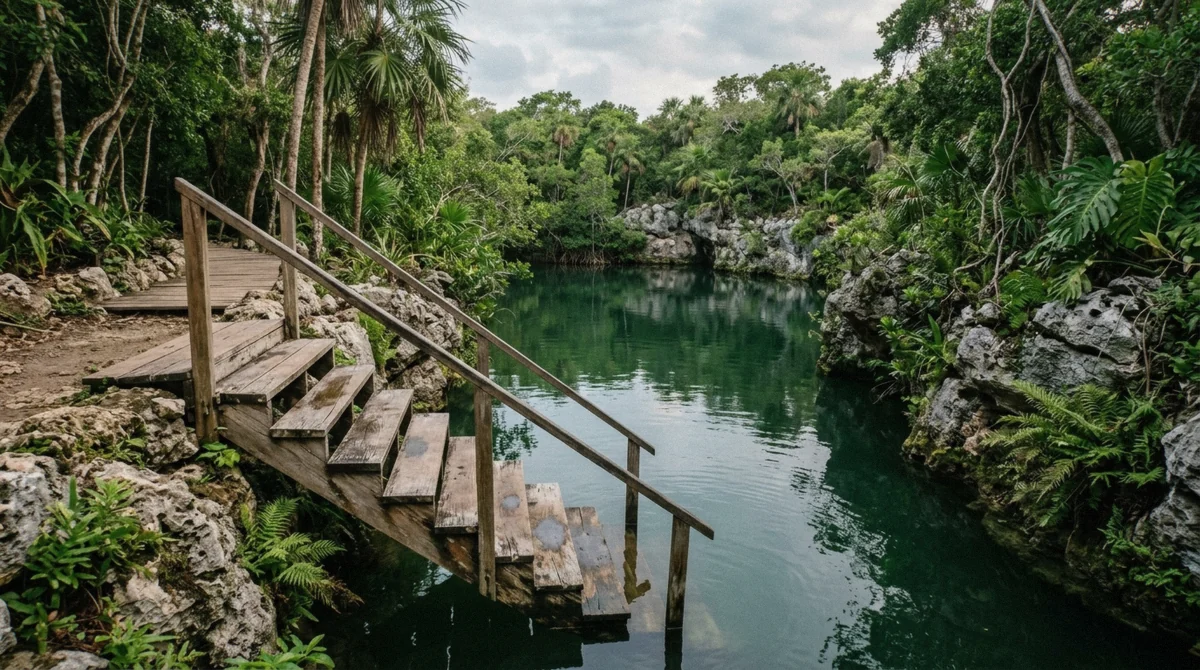
Entry stairs at the lagoon: the depth shelves gently from here. Illustrative image.
Frequently Asked Questions
Is Yal Ku worth it?
Yes, if you want calm, easy water or you are traveling with beginners and children. The sculpture garden adds value for the non-swimmers in your group. If your only goal is turtles, the bay is the better spend, and [Akumal bay turtle swim tours compared] lays out the guided options.
How much does Yal Ku lagoon cost?
The lagoon charges a per-person entry fee at the gate, and the exact current figure is not stated in our sources, so confirm the posted rate on arrival. Quintana Roo residents receive a discounted rate with ID. For price context, the beach-club day fee at Akumal Bay runs about 100 pesos and guided bay tours start from $20.
What are Yal Ku lagoon's opening hours?
The lagoon opens daily from 9 am to 5 pm. Last entry timing within those hours is not stated, so arrive with time to spare. Going at opening also means fewer people in the water.
Are there crocodiles in Yal Ku lagoon?
Crocodile sightings are not addressed in our source material, so we cannot confirm either way. The lagoon is brackish and connected to mangrove habitat, which is the kind of place crocodiles can appear on this coast. If a crocodile is posted or spotted, stay out and follow staff instructions.
Can you still swim with turtles in Akumal?
Yes. Green, loggerhead and hawksbill turtles graze the bay's seagrass year round, with no sighting season. Since the bay became a marine protected area, the turtle circuit is guided only, with one guide per at most 6 swimmers, sessions of at most 55 minutes and a mandatory life jacket. Book a slot such as the [VIP turtle swim + GoPro] or the [Small-group VIP snorkel] to lock in your place.